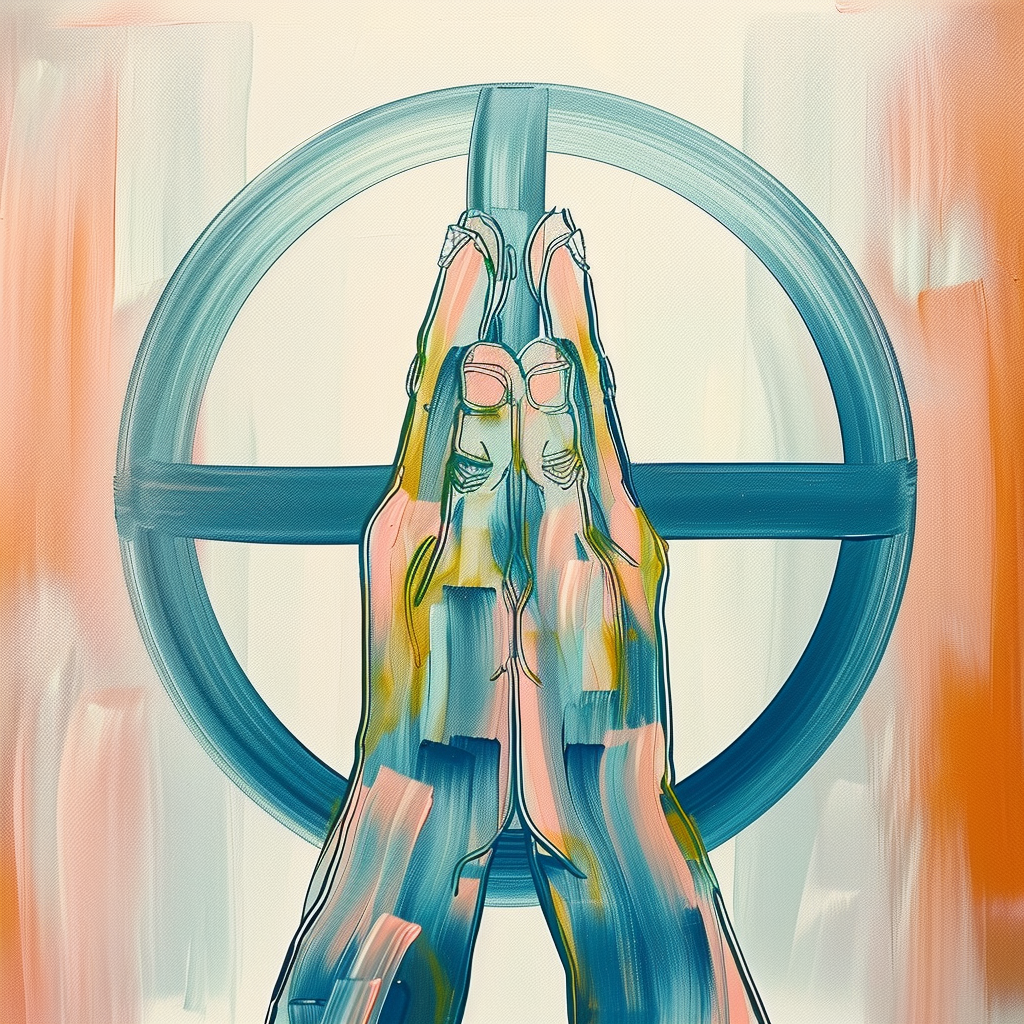
I want the peace of God.
Welk persoon of welke situatie ontneemt je momenteel je vrede? Vul het hieronder in voor een persoonlijke reflectie op basis van deze les.
Lesson 185: “I want the peace of God.”
To say, “I want the peace of God,” is to speak the deepest truth of your heart. Yet, as the Course gently points out, we rarely mean it without reservation. This lesson is about uncovering what you really want beneath all the shifting desires of the ego, and allowing yourself to admit that nothing but God’s peace will satisfy you.
Let’s walk through what this means, both metaphysically and practically, and how you can live with this lesson today.
1. The Core Teaching
What is the peace of God?
The peace of God is not an emotional high, a quiet afternoon, or a period of relief from problems. Those are reflections or symbols of peace, but not its source.
The peace of God is:
- The natural state of your true Self.
- The condition of perfect oneness, where nothing is missing and nothing is threatened.
- A peace that does not depend on circumstances, time, or outcomes.
It is the peace that comes from knowing:
- You are as God created you.
- You cannot be harmed in truth.
- You share one Life with all your brothers and with God.
This peace is not added to you; it is uncovered when illusions are released.
What is the ego trying to hide?
The ego’s entire thought system is built on one belief: separation is real and you are on your own. From this belief comes fear, guilt, and the constant search for something “out there” to complete you.
The ego is trying to hide:
1. *That you already have what you seek.*
If you truly recognized that peace, love, and completion are already within you, the ego’s entire purpose—seeking, striving, defending—would collapse.
2. *That you do not really want its world.*
The ego insists you want specialness, conflict, drama, and differences. It tells you that without them, life would be empty and meaningless. But deep down, you are tired of conflict. You are tired of fear. The ego hides this fatigue and keeps you chasing new forms of the same old emptiness.
3. *That you are innocent.*
If you knew you were innocent, you would not fear God. You would not fear His peace. The ego survives by keeping you feeling guilty and unworthy, so that true peace seems either impossible or dangerous.
What is the Holy Spirit revealing?
The Holy Spirit in your mind is the Voice for truth, the quiet reminder that:
- You are still as God created you.
- You have never truly left your Source.
- Nothing real can be threatened, and nothing unreal exists.
In this lesson, the Holy Spirit is revealing:
1. *Your one true desire.*
Beneath every wish for a person, a job, a possession, a status, or a change in circumstances, there is a single, shining desire: “I want to remember who I am in God. I want the peace of God.”
2. *The futility of substitutes.*
The Holy Spirit does not condemn your attempts to find peace in the world, but He gently shows you:
“Has this ever truly satisfied you? Has anything in time ever given you a peace that did not fade?”
This is not to make you feel guilty, but to help you see that you are worthy of something far greater than temporary comfort.
3. *That peace is a decision.*
Peace is not something that happens to you. It is something you choose by valuing it above all else. The Holy Spirit invites you to say with sincerity:
“I will no longer pretend I want something else more than peace. I choose the peace of God.”
2. Applied to Daily Life
Relationships
In relationships, the ego wants:
- To be right.
- To be special.
- To be needed or superior.
- To control how others see and treat you.
When you say, “I want the peace of God,” you begin to see:
- Being right is not worth losing peace.
- Being special is not worth feeling separate.
- Controlling another is not worth the anxiety it brings.
Example:
Your partner snaps at you. The ego reacts: “How dare they? I must defend myself.”
The Holy Spirit whispers: “Do you want to win this argument, or do you want the peace of God?”
If you choose peace, you might:
- Pause.
- Breathe.
- Ask silently, “Help me see this differently.”
- Respond gently, or say nothing until you are calm.
You are not sacrificing anything real by choosing peace. You are giving up only the ego’s satisfaction in conflict.
Work
At work, the ego seeks:
- Recognition, status, and comparison.
- Security through achievement.
- Identity through roles and titles.
When you choose the peace of God:
- You still do your work, but without making it your identity.
- You let go of the belief that your worth depends on performance.
- You stop using work to prove your value.
Example:
You don’t get the promotion you wanted. The ego says, “I’m not good enough. They don’t see my value.”
The Holy Spirit says, “Your value is given by God, not by a job title. Do you want to use this situation to suffer, or to remember peace?”
You can still seek a better role, but now from peace, not from lack.
Illness
Illness is especially challenging because the body seems so convincing. The ego uses illness to say:
- “You are weak, vulnerable, and at the mercy of the world.”
- “You are a body, and the body is your self.”
When you choose the peace of God, you are not denying symptoms. You are gently saying:
- “This body may feel pain, but my Self is not a body.”
- “My reality is not threatened by what happens in time.”
Example:
You are in pain or facing a diagnosis. You might say:
“I want the peace of God more than I want to interpret this through fear.
I am willing to let the Holy Spirit show me another way to see this.”
You still take whatever practical steps are loving and wise—seeing doctors, taking medicine—but you do so while remembering:
“My peace does not depend on outcomes. My peace is in God.”
Anxiety and Daily Stress
Anxiety usually comes from:
- Trying to control the future.
- Replaying the past.
- Believing you are alone and unsupported.
When you say, “I want the peace of God,” you are really saying:
- “I am willing to trust that I am not alone.”
- “I am willing to let go of trying to manage everything by myself.”
- “I am willing to let the present moment be enough.”
Example:
You’re overwhelmed by tasks. The ego says, “If I don’t handle all of this perfectly, disaster will come.”
The Holy Spirit says, “Peace is available now, even with a full schedule. Let Me guide you step by step.”
You might pause and ask:
- “What is the most loving thing to do next?”
- “Can I bring peace into this task, instead of waiting for it to be over to feel peaceful?”
3. Overcoming Resistance
Why might this lesson be difficult?
This lesson asks for honesty. It says, in effect:
“If you truly want the peace of God, you must want only that. You cannot keep other goals hidden and still claim you want peace.”
This can feel threatening because:
- Part of you still believes specialness, control, or worldly success can give you what you want.
- You may fear that if you truly choose God’s peace, you will lose the things you love.
- You may think, “If I give everything to God, He will take away what matters to me.”
The Course gently exposes that these fears come from a false image of God—as if He were a taker, not a giver. The ego projects its own nature onto God.
Gently addressing doubt and fear
If you feel resistance, you can say:
- “I am afraid that if I choose only the peace of God, I will lose myself.”
- “I am afraid that God’s will and my happiness are not the same.”
Then add:
- “Holy Spirit, help me see that my fear is not the truth. Show me that God’s peace is not a loss, but the end of loss.”
You are not asked to have perfect willingness, only a little willingness. The Holy Spirit uses even a small opening.
You might say:
“I am not sure I fully want the peace of God yet.
But I *want to want* it.
Please strengthen this little spark of willingness.”
This honesty is powerful. It invites healing without pretending you are further along than you feel.
4. Today’s Practice
Here is a simple way to practice Lesson 185 today.
1. Morning quiet time (5–15 minutes)
- Sit quietly and close your eyes.
- Say slowly, with as much sincerity as you can:
“I want the peace of God.
To say these words is nothing.
But to mean these words is everything.”
- Then gently ask:
“Do I truly want the peace of God above all else?
What do I think I still want more than peace?”
- Let any answers arise—money, a person, a status, a certain outcome. Don’t judge them. Just notice.
- Say:
“Holy Spirit, I offer You these other goals.
I am willing to learn that nothing can give me what Your peace gives me.
Help me want the peace of God more than anything else.”
Then sit in silence for a few minutes, simply resting in the intention to want God’s peace.
2. Short practice periods throughout the day
Several times today, pause for a few moments and say inwardly:
- “I want the peace of God.”
- “Nothing else will satisfy me.”
- “I am willing to remember this now.”
Use this especially:
- When you feel irritated or anxious.
- When you are tempted to argue or defend.
- When you are chasing some outcome with tension.
3. In moments of conflict or stress
When something triggers you, ask:
- “What do I want right now—do I want to be right, or do I want the peace of God?”
- “Do I want this grievance, or do I want peace?”
Then, even if you still feel upset, say:
“I choose the peace of God.
I may not feel it yet, but I choose it.
Holy Spirit, help my choice become real in my experience.”
4. Evening reflection
Before sleep, take a few minutes to review your day:
- Where did you remember to choose peace?
- Where did you forget and choose conflict or fear?
No guilt. Just gentle noticing. Then say:
“I want the peace of God.
I am willing to learn from today.
Correct my perception and guide my dreams in peace.”
5. Comparable ACIM Lessons
Several lessons echo and support Lesson 185:
- **Lesson 34: “I could see peace instead of this.”**
Shows that peace is always an option in any situation. Lesson 185 goes deeper, asking you to want peace as your only goal.
- **Lesson 51 (Review): “Nothing I see means anything.”**
Begins loosening the mind from the world’s meanings, making room for the desire for true peace.
- **Lesson 70: “My salvation comes from me.”**
Reminds you that peace is an inner choice, not something the world gives. This prepares you to say, “I want the peace of God,” and look within for it.
- **Lesson 109: “I rest in God.”**
Describes the experience of the peace you are choosing in Lesson 185—a deep rest beyond all worry.
- **Lesson 185 itself connects strongly with Lesson 200: “There is no peace except the peace of God.”**
Lesson 185 is the desire; Lesson 200 is the recognition that all other forms of “peace” are illusions.
6. Closing Thought
Each time you say, “I want the peace of God,” you are remembering who you really are. Even if you feel conflicted, even if part of you still clings to the world’s promises, your deeper Self is calling you home.
You do not have to be perfect. You only have to be willing. Let this be your quiet prayer today:
“I may still be confused about many things,
but I know this: I want the peace of God.
Help me remember that nothing else will ever be enough.”