Ten of Pentacles
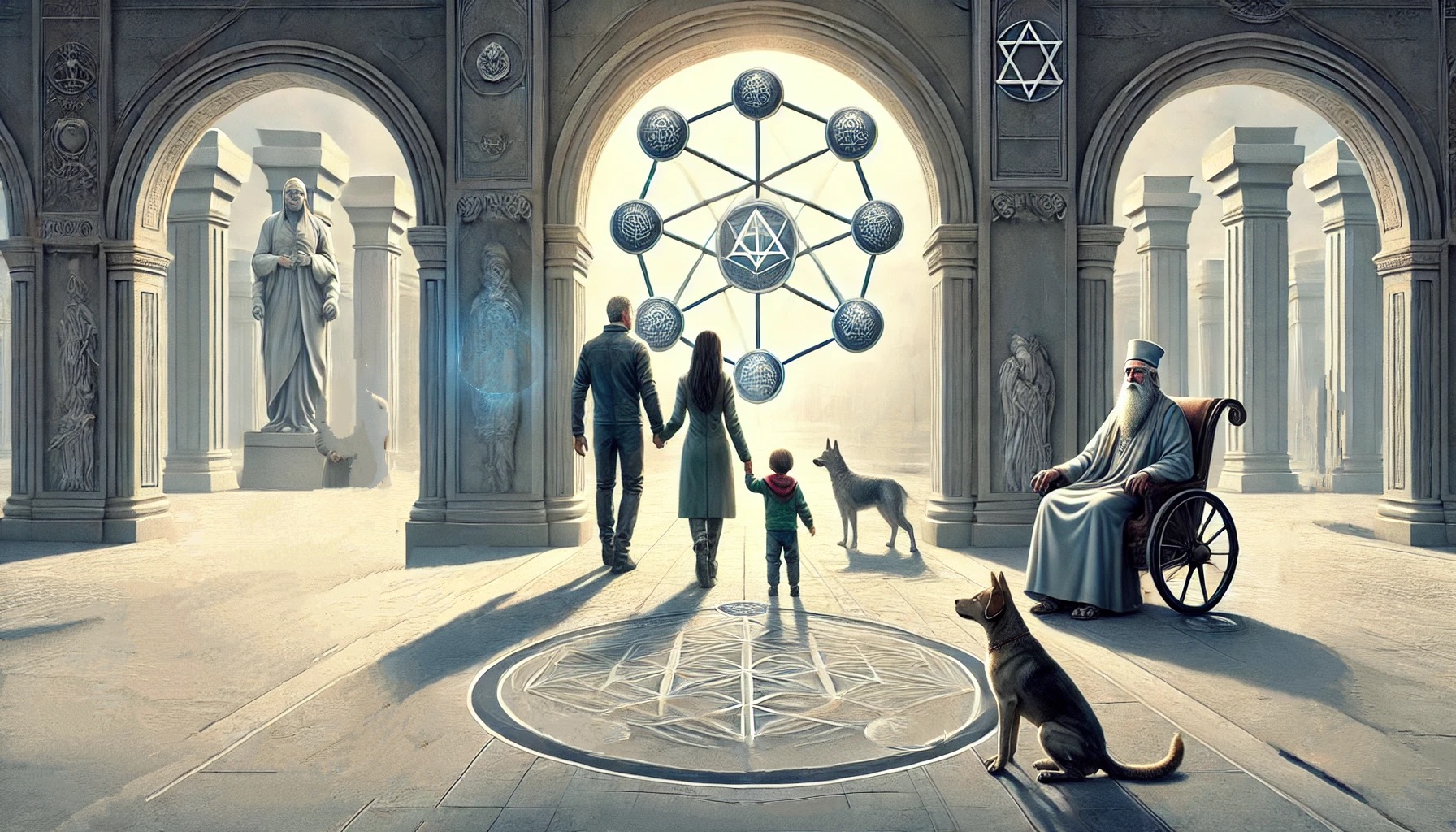
Archetype: A man and a woman stand under an arch leading to a family house. They are accompanied by a child, who is curiously looking at the two dogs that are listening to an old man sitting in the foreground. The ten pentacles form the kabbalistic Tree of Life, spread over the whole card, suggesting fulfillment and completion — a gentle turning of the spiral of life. A family over several generations experiences the certainty of home and each other. The old man in the foreground, who looks at the emperor, suggests that things are being watched over by a power greater than can be imagined — the unchangeable reality, which is expressed in continuous change.
Lesson: The Ten of Pentacles depicts a family scene symbolizing fulfillment, completion, and generational continuity. This reflects the ACIM concept of our true wholeness and eternal nature in God. The old man in the card represents wisdom and the recognition of a higher power, analogous to the Holy Spirit in ACIM, guiding us beyond worldly illusions. The imagery suggests that while the world changes, our true reality as God’s creation remains unchangeable and secure. This aligns with ACIM’s teachings on forgiveness, the eternal nature of our true home, and the guidance of the Holy Spirit to see beyond illusions to the truth.
Reflection Questions:
Certainly, dear friend. Here are reflection questions inspired by the Ten of Pentacles, gently guiding you to look within with the loving clarity of A Course in Miracles:
1. When you consider the abundance and legacy represented by the Ten of Pentacles, what beliefs arise about your own worthiness to receive and share abundance?
2. In moments of fear or lack, how might you invite Spirit to reinterpret your perception, allowing you to see the lasting treasures of Love instead of the temporary illusions of the ego?
3. Where do you notice attachment to material security, and how might a shift to trusting in spiritual inheritance bring you peace?
4. Are there family patterns or generational stories that you feel bound by? How can forgiveness release you—and others—from these perceived limits?
5. How does the idea of “legacy” change when viewed through the lens of Love instead of fear?
6. When you feel responsible for others’ happiness or security, can you remember that true safety and joy come from within, and extend your peace outward?
7. What would it mean to remember that your true inheritance is not of this world, but of Spirit? How does this awareness bring comfort or challenge to your current experience?
8. As you reflect on the gifts you have and the ones you give, can you notice where gratitude softens your heart and invites a greater sense of connection?
May these questions gently guide you to the eternal abundance and peace that lie within.