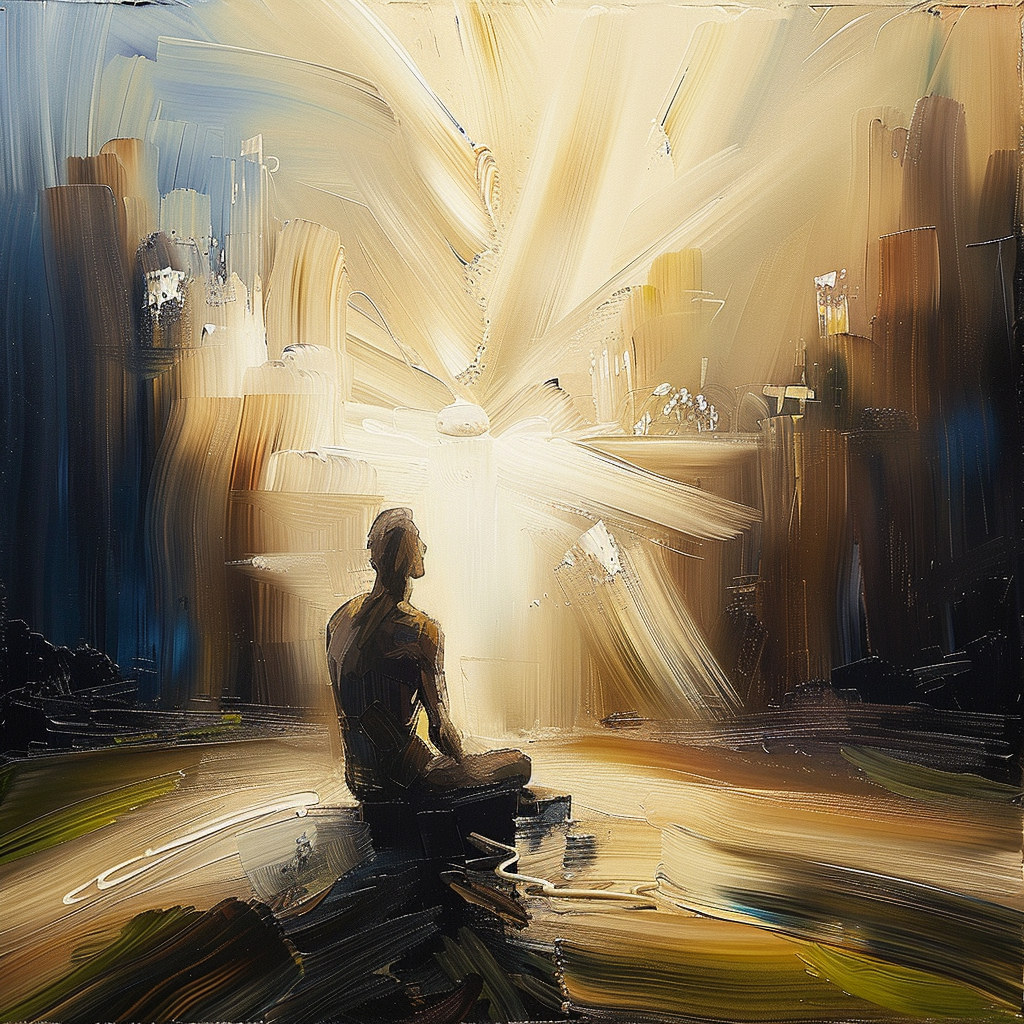
God is the strength in which I trust.
Welk persoon of welke situatie ontneemt je momenteel je vrede? Vul het hieronder in voor een persoonlijke reflectie op basis van deze les.
Lesson 47: “God is the strength in which I trust.”
The Core Teaching
This lesson invites you to shift where you believe your strength comes from. Most of the time, we think our strength lies in our body, our intelligence, our plans, our money, our personality, or our willpower. The Course gently tells us: none of these are real sources of strength. They are temporary, fragile, and easily shaken.
The lesson says that *God is the strength in which you trust*. That means your real strength is not personal; it is shared. It is not limited; it is infinite. It is not vulnerable; it is invulnerable.
What is the ego trying to hide?
The ego’s survival depends on the belief that you are small, separate, and at risk. It wants you to believe:
- You are a body, and bodies can be hurt.
- You are alone, and must protect yourself.
- You are responsible for managing everything by yourself.
- If you don’t worry, you’re being irresponsible.
- If you don’t control, you’ll be unsafe.
So the ego hides the simple truth that:
You are carried, not alone.
You are held, not abandoned.
You are guided, not lost.
The ego is terrified of your remembering that *you are joined with God*, because if that is true, then fear has no basis. If God is your strength, then the ego’s entire story of danger, guilt, and struggle falls apart.
The ego tries to keep you focused on:
- Your past mistakes
- Your future worries
- Your current problems
- Your body’s vulnerabilities
Why? Because if you are preoccupied with these, you will not look inward to the quiet place where God’s strength lives in you.
What is the Holy Spirit revealing?
The Holy Spirit, the Voice for God in your mind, is constantly whispering a different message:
- You are not alone.
- You are not weak.
- You are not guilty.
- You are not in danger of losing your real Self.
The Holy Spirit reveals that *your mind is joined with God’s Mind*. This is not poetry; it is metaphysical fact in the Course’s teaching. Your true Self shares God’s strength, God’s peace, and God’s certainty.
So when you say, “God is the strength in which I trust,” you are really saying:
- I choose to trust in what is eternal, not temporary.
- I choose to trust in what cannot be threatened.
- I choose to trust in the Love that created me, instead of my own fearful thoughts.
This lesson is not asking you to “borrow” strength from a distant God. It is asking you to *remember the strength that is already in you* because you are not separate from your Source.
Applied to Daily Life
Let’s bring this into very ordinary situations.
Relationships
You might think:
- “I need this person to behave a certain way so I can feel safe.”
- “I must protect myself by attacking, withdrawing, or controlling.”
The ego says your strength lies in:
- Defending yourself
- Being right
- Getting the upper hand
- Making the other person feel guilty
This lesson invites a different trust:
- “I don’t have to defend myself. God is my strength.”
- “I don’t need to attack. I can trust that love, not fear, is my safety.”
- “I can be honest and kind, because my security doesn’t depend on their reaction.”
In a conflict, you might silently say:
“God is the strength in which I trust.
I do not need to win. I need only to remember the Love that holds us both.”
This opens the door for gentler words, more listening, and less reactivity.
Work and Responsibilities
At work, the ego says:
- “It’s all on me.”
- “If I make a mistake, I’m doomed.”
- “I must constantly worry to stay safe.”
This lesson invites you to remember:
- “I can do my part, but the outcome is not my burden alone.”
- “My worth is not defined by performance.”
- “Guidance is available to me in every situation.”
Before a meeting, a presentation, or a difficult decision, you can pause and say:
“God is the strength in which I trust.
I do not rely on my anxiety for protection.
I rely on the quiet wisdom of the One Who goes with me.”
You still prepare, you still act responsibly, but you do it from a calmer place, not from panic.
Illness and the Body
Illness often makes the ego’s story feel very convincing:
- “I am this body.”
- “If the body is weak, I am weak.”
- “If the body is threatened, I am threatened.”
The Course never asks you to deny symptoms or refuse help. It asks you to *question the identity* you’ve placed in the body.
You can say:
“My body may feel weak, but I am not this body.
God is the strength in which I trust.
My true Self cannot be sick, damaged, or diminished.”
You may still take medicine, see doctors, and rest. But you do so with less fear, more peace, and a quiet trust that your real Self is untouched.
Anxiety and Daily Stress
When anxiety rises, the ego says:
- “You are in danger.”
- “You must think harder, worry more, control more.”
This lesson offers a different anchor:
“I feel anxious because I am trusting in my own strength.
I can choose again.
God is the strength in which I trust.”
You might use this in very small moments:
- In traffic
- Waiting for a text or email
- Paying bills
- Dealing with unexpected changes
Each time you remember, you are loosening the ego’s grip and inviting the Holy Spirit’s calm into your mind.
Overcoming Resistance
This lesson can feel difficult because it seems to ask you to *let go of control*. The ego hears:
- “If I don’t rely on my own strength, I’ll be helpless.”
- “If I trust God, I’ll be passive or irresponsible.”
- “If I stop worrying, something bad will happen.”
But the Course is not asking you to stop acting; it’s asking you to stop *acting from fear*. You still make phone calls, pay bills, care for your body, and speak up when needed. The shift is internal:
- From panic to peace
- From self-attack to self-kindness
- From isolation to partnership with the Holy Spirit
You might also feel:
- “I don’t feel God’s strength. I just feel scared and tired.”
That’s okay. The lesson does not require you to feel it fully; it only asks your *willingness* to be wrong about where your strength comes from.
You can say:
“I don’t fully believe this yet,
but I am willing to consider that God is the strength in which I trust.
I am willing to be shown.”
Your little willingness is enough. The Holy Spirit does the rest.
Today’s Practice (Lesson 47)
Here is a simple way to practice this lesson today, in line with the Workbook’s intent:
1. Quiet Practice Periods (longer sessions)
Aim for at least one or two longer periods (5–10 minutes, or more if you feel drawn).
1. *Sit quietly* and close your eyes.
2. Take a few gentle breaths, letting the body relax.
3. Say slowly to yourself:
“God is the strength in which I trust.”
4. Let the words sink in. Then add:
“It is not my own strength through which I forgive.
It is not my own strength through which I live.
It is not my own strength through which I see.
God is the strength in which I trust.”
5. If worries or problems come to mind, don’t push them away.
- Gently place each one into this thought:
“God is the strength in which I trust in this situation.”
6. Rest in quiet. You don’t need to “do” anything. Just let the idea be present in your mind. If you drift, gently return to:
“God is the strength in which I trust.”
2. Short Practice Periods (frequent reminders)
Throughout the day, whenever you feel:
- Tension
- Fear
- Frustration
- Fatigue
pause for a moment and say silently:
“God is the strength in which I trust.”
You can also be more specific:
- “God is the strength in which I trust in this conversation.”
- “God is the strength in which I trust as I drive.”
- “God is the strength in which I trust as I face this fear.”
Let this thought become a soft, steady background to your day.
Comparable ACIM Lessons
This lesson is closely connected to several others:
- **Lesson 38: “There is nothing my holiness cannot do.”**
Both lessons shift your sense of power from the ego to your true Self. Lesson 38 focuses on the power of your holiness; Lesson 47 focuses on the strength of God in you.
- **Lesson 41: “God goes with me wherever I go.”**
If God goes with you, then His strength is always available. Lesson 47 builds on this by asking you to *trust* that strength.
- **Lesson 44: “God is the light in which I see.”**
Lesson 44 says your real vision comes from God’s light, not the body’s eyes. Lesson 47 says your real strength comes from God, not the body or ego.
- **Lesson 48: “There is nothing to fear.”**
This naturally follows Lesson 47:
If God is your strength, and that strength is with you always, then truly, there is nothing to fear.
Closing Thought
You do not have to make yourself strong.
You only have to stop insisting that you are weak.
Today, let yourself lean—just a little more—into the quiet truth already within you:
God is the strength in which you trust.
You are not alone, and you never have been.