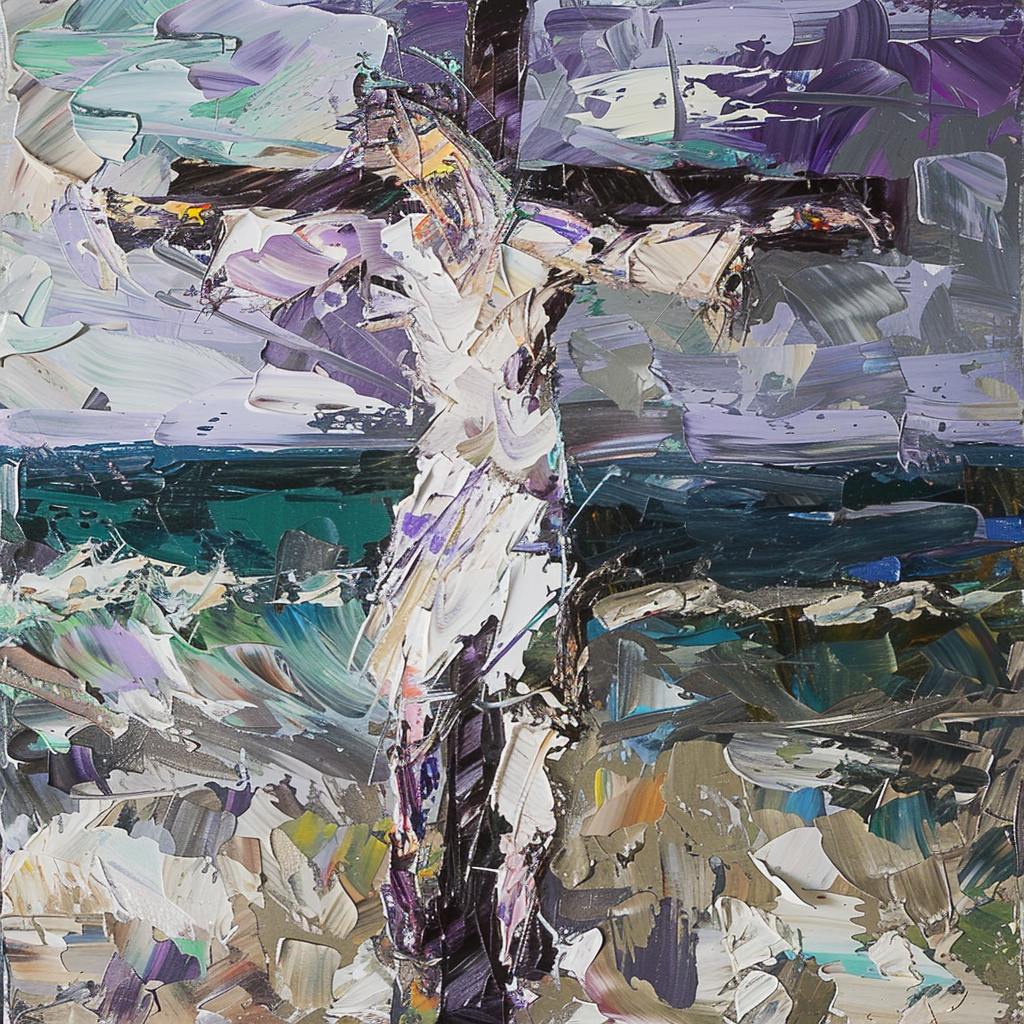
It can be but myself I crucify.
Welk persoon of welke situatie ontneemt je momenteel je vrede? Vul het hieronder in voor een persoonlijke reflectie op basis van deze les.
Lesson 196: “It can be but myself I crucify.”
I. The Core Teaching
This lesson goes straight to the heart of the Course’s radical message:
No one has ever truly hurt you.
You have only misunderstood yourself.
That can sound shocking, even offensive, to the ego. But the Course is not denying that pain seems real here. It is saying that the cause of pain is never outside you. The world, other people, the body, circumstances—these are not the real source of suffering. The mind is.
What the Ego Is Trying to Hide
The ego’s survival depends on one central lie:
*“I am a victim of what others have done to me.”*
From this lie, the ego builds an entire identity:
- “I am the one who was abandoned.”
- “I am the one who was betrayed.”
- “I am the one who was unfairly treated.”
- “I am the one who is not loved enough, not respected enough, not safe enough.”
The ego needs someone to blame. It needs a “guilty other” to justify its own sense of separation and specialness. So it projects guilt outward:
- “You hurt me.”
- “You ruined my life.”
- “You made me feel this way.”
Underneath this projection is a deeper, hidden belief:
*“I have attacked God. I have separated from Love. I am guilty.”*
This is the secret the ego is trying to hide. It tells you:
- “You are not the one who did anything wrong. Others did.”
- “You are the innocent victim; they are the guilty ones.”
But the guilt doesn’t disappear. It just gets covered over with blame, resentment, and grievance. And so the mind feels constantly unsafe, constantly threatened, constantly needing defense.
Lesson 196 exposes this mechanism. It says:
“When you think you are attacking another, you are attacking yourself.
When you think you are crucifying another, you are crucifying yourself.”
Not as punishment, but because there is only one mind.
There is only one Son of God.
You cannot condemn another without reinforcing condemnation in your own mind. You cannot hold someone as guilty without strengthening your own belief in guilt. You cannot mentally crucify another without tightening the nails in your own hands.
The ego wants you to believe:
- Attack can be justified.
- Some people deserve your anger.
- Your pain is their fault.
Because as long as you believe this, you will never look where the real healing lies: *within your own mind.*
What the Holy Spirit Is Revealing
The Holy Spirit gently reveals the opposite:
1. *There is only one Self.*
What you do to another, you do to yourself, because there is no real “other.”
2. *You cannot be unfairly treated.*
Not in truth. The Self God created cannot be harmed, diminished, or attacked.
3. *Your suffering comes from your own choice to believe in guilt and separation.*
Not as blame, but as a simple description of cause and effect in the mind.
4. *Forgiveness is self-release.*
When you forgive, you are not being noble or generous to someone who “doesn’t deserve it.”
You are freeing yourself from your own belief in guilt.
The Holy Spirit uses this lesson to say:
“Child of God, you are not a victim.
You are powerful.
You are the dreamer of the dream, not the figure in it.
When you stop crucifying others in your mind, you will discover that you have never truly crucified yourself. You remain as God created you—whole, innocent, and free.”
II. Applied to Daily Life
Let’s bring this into the situations that feel very real and very personal.
1. Relationships
Imagine you feel hurt by a partner, friend, or family member:
- They forgot something important.
- They spoke harshly.
- They betrayed a confidence.
The ego’s reflex is:
- “They did this to me.”
- “I am justified in my anger.”
- “They deserve my coldness, my distance, my attack.”
Lesson 196 invites a different inner response:
- “If I crucify them in my mind—judge them, condemn them—I crucify myself.”
- “If I hold them guilty, I strengthen my own belief in guilt.”
- “Do I want to be right about their guilt, or do I want to be free?”
You might say silently:
“It can be but myself I crucify.
I choose to release both of us from this guilt.”
This doesn’t mean you must stay in unhealthy situations or ignore practical boundaries. It means that whatever you do outwardly, you do it without attack in your heart. You can say “no” without crucifying. You can walk away without hatred.
2. Work and Career
At work, you might feel:
- Unappreciated by your boss.
- Undermined by a coworker.
- Treated unfairly in promotions or pay.
The ego says:
- “They are the problem.”
- “My stress is because of them.”
The Course invites you to notice:
- Your inner attack thoughts.
- Your fantasies of revenge.
- Your quiet resentments.
Then gently remember:
“If I attack them in my mind, I am reinforcing my own sense of lack and fear.
It can be but myself I crucify.”
You can still:
- Ask for a raise.
- Clarify boundaries.
- Seek a new job.
But you practice doing so from a mind that is choosing not to crucify anyone—including yourself. You let the Holy Spirit reinterpret the situation as an opportunity to see your own power to choose peace.
3. Illness and the Body
When the body is sick or in pain, the ego often says:
- “My body has betrayed me.”
- “Life is unfair.”
- “God has abandoned me.”
Or it might blame:
- The doctor.
- The environment.
- Genetics.
Lesson 196 invites you to see that the deepest suffering is not the physical condition, but the mental story of guilt, blame, and victimhood. You can say:
“This body’s condition does not define me.
I am still as God created me.
If I blame the body, the world, or God, I crucify myself with my own thoughts.
I choose instead to accept the innocence of all.”
This does not mean you neglect treatment or deny symptoms. It means you let the Holy Spirit show you that your true Self has never been harmed. You use the situation to deepen trust, not to deepen fear.
4. Anxiety and Daily Stress
With anxiety, the mind often attacks itself:
- “What’s wrong with me?”
- “Why can’t I handle this?”
- “I’m weak, broken, failing.”
Here the crucifixion is very direct: you are nailing yourself to a cross of self-judgment.
Lesson 196 invites a gentle shift:
“It can be but myself I crucify—and I no longer wish to do this.
I will not attack myself for feeling anxious.
I will offer compassion instead of judgment.”
Whenever you feel stressed—traffic, bills, delays, conflicts—notice how quickly the mind wants to attack:
- Yourself (“I should have done better.”)
- Others (“They’re so inconsiderate.”)
- Life itself (“Nothing ever works out for me.”)
Each time, pause and remember:
“If I attack, I crucify myself.
I choose again.”
III. Overcoming Resistance
This lesson can bring up strong resistance. Some common fears:
1. “Are you saying it’s my fault?”
The ego hears this lesson as blame:
“If I’m not a victim, then everything is my fault.”
The Holy Spirit is not blaming you. The Holy Spirit is empowering you.
- “Fault” implies you are bad and deserve punishment.
- “Cause” implies you are powerful and can choose again.
The Course is saying:
Your mind is powerful enough to choose peace, regardless of what seems to happen.
2. “But I really *was* hurt.”
On the level of the body and personality, yes, painful things have happened. The Course never asks you to pretend they didn’t. It asks you to question what you are.
You are not the wounded character in the story.
You are the holy mind in which the story appears.
To the ego, this sounds like invalidation.
To the Spirit, it is liberation.
3. Fear of Letting Go of Grievances
Grievances can feel like protection:
- “If I forgive, they’ll do it again.”
- “If I don’t hold this against them, I’m saying it was okay.”
The Holy Spirit gently reassures:
- Forgiveness does not mean you approve of hurtful behavior.
- Forgiveness means you refuse to imprison yourself in hatred.
- You can forgive and still say “no” to harmful patterns.
The real fear is not of forgiving others, but of losing the identity the ego built around being wronged. Who are you if you are not a victim?
You are the Son of God.
That is what feels so vast, so unfamiliar, that the ego trembles.
IV. Today’s Practice
Here is a simple way to practice Lesson 196 today.
1. Morning Quiet Time (5–15 minutes)
- Sit quietly, eyes closed if comfortable.
- Take a few gentle breaths and relax your body.
- Say slowly, with intention:
“It can be but myself I crucify.
I am not a victim of the world I see.
I choose to release all attack.”
- Let the words sink in.
You don’t have to force belief. Just be willing.
- Imagine someone you feel upset with. Notice your judgments.
Then say inwardly:
“If I crucify you in my mind, I crucify myself.
I choose to free us both.
It can be but myself I crucify.”
- Sit a moment in quiet, letting any softening or resistance simply be there, without judgment.
2. Hourly (or As Often as You Remember)
Several times during the day, pause briefly and say:
“It can be but myself I crucify.
I will not hurt myself today.”
Use this especially:
- When you feel anger.
- When you feel guilty.
- When you feel like a victim.
Even a 10-second pause is powerful.
3. With Specific Situations
When something upsets you:
1. Notice the upset.
2. Notice who you are blaming (another, yourself, the world).
3. Silently say:
“I am tempted to crucify here.
It can be but myself I crucify.
I choose peace instead of this.”
You don’t have to feel peaceful immediately. The willingness is the practice.
4. Evening Reflection
Before sleep, gently review your day:
- Where did you attack in your mind?
- Where did you feel like a victim?
For each memory, say:
“In that moment, I was crucifying myself.
I now choose to release it.
It can be but myself I crucify, and I choose no more crucifixion.”
Offer the day to the Holy Spirit to be reinterpreted.
V. Comparable ACIM Lessons
This lesson is closely connected to several others:
- **Lesson 31: “I am not the victim of the world I see.”**
Introduces the idea that victimhood is a choice, not a fact.
- **Lesson 68: “Love holds no grievances.”**
Shows that grievances are attacks on love in your own mind.
- **Lesson 93: “Light and joy and peace abide in me.”**
Reminds you of what you are, beyond guilt and attack.
- **Lesson 134: “Let me perceive forgiveness as it is.”**
Clarifies that forgiveness is self-release, not sacrifice.
- **Lesson 190: “I choose the joy of God instead of pain.”**
States that pain is a choice, just as joy is.
- **Lesson 197: “It can be but my gratitude I earn.”**
Follows this lesson by showing that as you stop crucifying, you begin to receive your own love and gratitude.
Together, these lessons build the understanding that:
- You are not a victim.
- Attack is always self-attack.
- Forgiveness is the way home to your own peace.
VI. Closing Thought
Each time you choose not to crucify—yourself or another—you are quietly stepping down from the cross the ego built, and walking out of the tomb of guilt.
You are not asked to do this perfectly, only to be willing.
Today, let this be your gentle intention:
“I will not hurt myself today.
It can be but myself I crucify,
and I am ready to be free.”